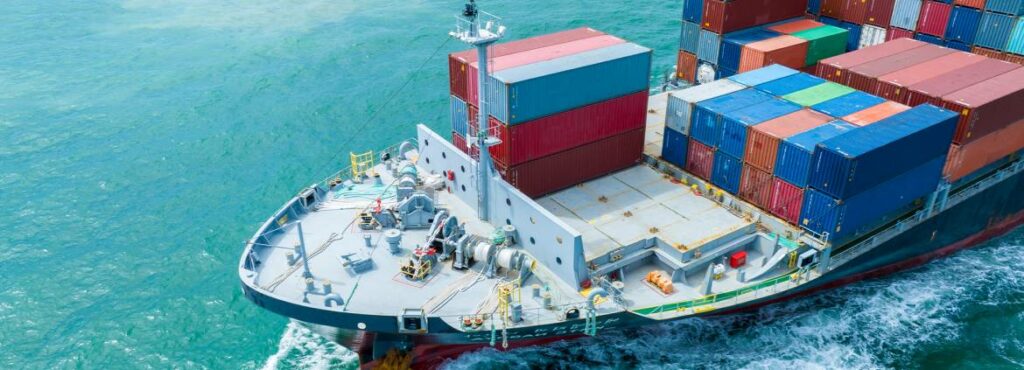
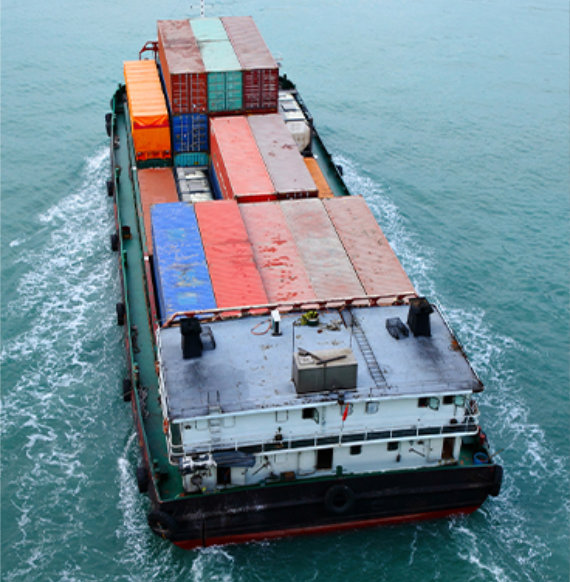
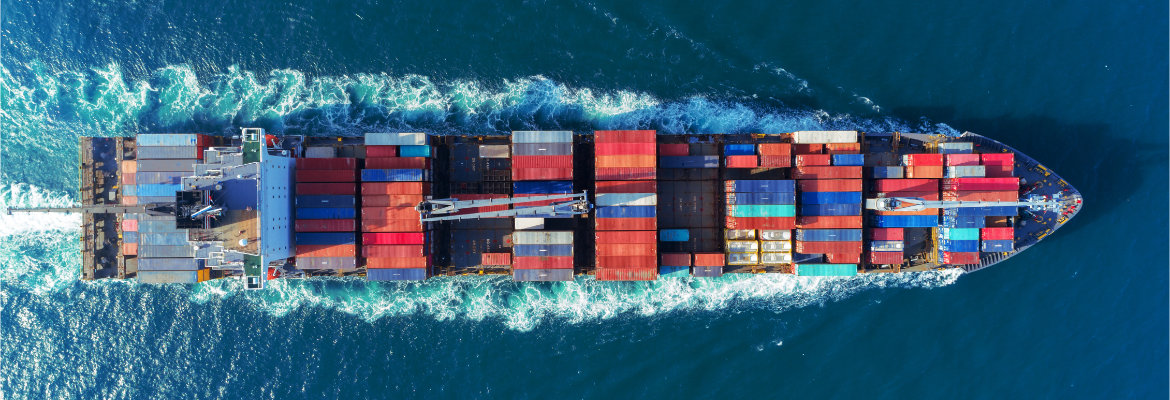
Import larger volume items with our Ocean Freight service for business.
ConsolidatedShipping
Consolidated shipping volumes can dramatically reduce the unit cost of each cubic meter. Compared to LCL, Buyer’s Consolidation saves approximately 15-25% from container freight station (CFS) to port, subject to freight market tendencies, depending on the number of shipments to be consolidated.
How can Buyer's ConsolidationSave cost?
Buyer’s Consolidation can help reduce the landed cost of goods by decreasing destination cargo handling fees, transportation fees, and transit times. By consolidating multiple suppliers into one container, customers can benefit from reduced costs, decreased carbon emissions, and full supply chain transparency in a more simplified manner compared to multiple LCL shipments.
Buyer’s Consolidation combines shipments from multiple suppliers into one fully utilized container, optimizes volume allocation and shipping routes across your entire supply chain.
Buyer’s Consolidation maximizes your container utilization by grouping multiple suppliers together, all under a single consignee. Doing so limits the use of 20-foot containers and LCL shipments—and reduces freight costs, your carbon footprint, destination labor costs, customer inventory levels, and material costs.
The choice of expedition mode: FCL or LCL
The choice of shipment mode is very important in financial respects, since the expediter must always aim to minimize the cost of transport. For example, the choice of grouped shipment (LCL) allows cost savings if the goods do not fill a container (less than 15 cubic meters). The LCL mode also allows savings on storage by shipping smaller volumes more frequently.
However, the security factor must also be considered. With grouped shipment, loading/unloading operations (breaking bulk) are higher in number, which could generate damage of goods. Clients in need of secure transport prefer to use single containers (FCL). This mode of transport excludes breaking bulk, the container is sealed after initial loading and will not be opened until arrival at destination.
Examples and practical applications
FCL/LCL shipments in practice
The containers used in loading meet ISO standards specifications with dimensions – width 8 feet and length 20 or 40 feet.
The client is invoiced per cubic meter or per ton, according to the ship. The FCL mode is generally cheaper than the LCL mode. FCL provides less handling operations for transporters. According to this mode, delivery is also faster since there is no grouping or separation of goods to carry out, which could lead to delays. The price of the FCL mode changes quickly, especially in function of available space on ships. FCL/FCL: the expediter’s package travels in a container, then delivered to the recipient.
Choose from a wide range of CFS value-added services, including palletization, sorting, pick and pack, labeling and repacking. Each service can be customized as needed. Additionally, leverage powerful product combinations: by bundling Buyer’s Consolidation with Order Management, for example, you can manage your consolidation flow with full visibility at the order and SKU levels, or bundle Buyer’s Consolidation with Booking Management to move freight, assigning the single origin consolidator to streamline the process.